Industrial Automation Systems in the Philippines for Modern Industries
Industrial automation systems are essential for improving productivity, ensuring consistent quality, and enabling efficient operations across Philippine industries.
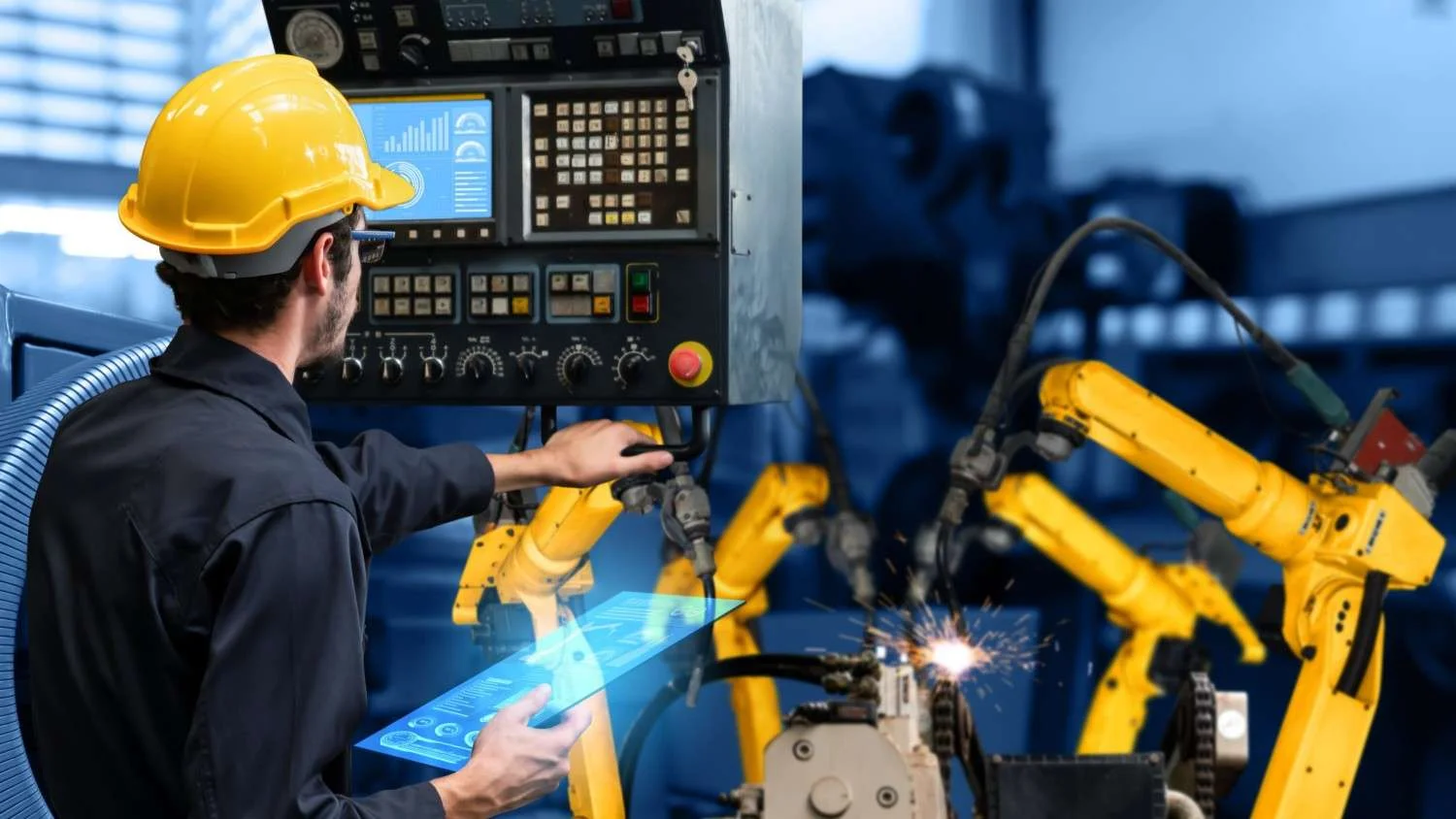
Industrial automation systems are essential for improving productivity, ensuring consistent quality, and enabling efficient operations across Philippine industries.
As global industries become more competitive, automation has shifted from a “nice-to-have” option to a strategic necessity. Modern production lines now rely on precise control systems, real-time monitoring, and advanced hardware and software solutions to maintain stability and productivity. In the Philippines, sectors such as food and beverage, semiconductors, automotive, power generation, and chemical processing are rapidly integrating automation to address labor challenges, enhance safety, and meet international production standards.
This guide provides a complete, industry-level overview of industrial automation systems — what they are, how they work, the technologies involved, and the real business value they deliver. It also highlights Fuji Electric’s automation capabilities, offering trusted solutions designed for the demands of Philippine industries.
1. What Are Industrial Automation Systems?
Industrial automation systems are advanced technologies designed to control and monitor machinery, production lines, and industrial processes with minimal human intervention. These systems combine hardware, software, and control logic to ensure accuracy, stability, and safety across various manufacturing processes.
At their foundation, industrial automation systems operate by:
- Controlling machines and processes more consistently than manual operators
- Reducing errors, downtime, and operational risks
- Providing real-time monitoring and data-driven decision-making
- Enabling more efficient scaling of production operations
Industrial automation encompasses a broad ecosystem that includes sensors, controllers, actuators, industrial networks, and supervisory control and data acquisition (SCADA) systems. Together, these components allow industries to increase output, improve reliability, and maintain smooth production even under high operational demands.
Industrial automation systems in the Philippines combine advanced control technologies, including PLCs, SCADA, and distributed control systems, to streamline industrial processes and improve operational efficiency.
2. How Industrial Automation Works: Core Building Blocks
Industrial automation systems rely on multiple interconnected components that communicate and respond to conditions inside a production environment. These elements collectively ensure proper control, monitoring, adjustment, and coordination.
Below are the essential building blocks of an automation system:
2.1 Sensors — Detect Conditions and Provide Real-Time Feedback
Sensors are the “eyes and ears” of the automation system. They continuously detect changes such as temperature, pressure, position, flow, speed, and voltage. Without reliable sensor feedback, automated processes cannot function accurately.
Examples of industrial sensors used in automation:
- Temperature and humidity sensors
- Proximity and position detectors
- Pressure and flow sensors
- Vibration and load monitors
Fuji Electric’s role:
Fuji Electric offers a wide selection of accurate and reliable sensors built for harsh industrial conditions, enabling stable feedback loops and real-time condition monitoring.
2.2 Actuators — Convert Signals Into Movement or Action
Once the system detects a condition through sensors, actuators respond accordingly. Actuators operate valves, motors, cylinders, and other mechanisms that move or adjust equipment.
Common types of actuators:
- Pneumatic actuators
- Servo motors
- Electric drives
- Hydraulic actuators
Together, sensors and actuators form the first layer of automation, enabling precise and automated control across production lines.
2.3 Controllers — The Brain of the Automation System
Controllers such as temperature controllers interpret sensor data and issue commands to actuators. They execute programmed logic, manage timing, and ensure processes stay within required parameters.
(Programmable Logic Controllers) PLCs
PLCs, Programmable Logic Controllers, are industrial-grade controllers engineered for reliability. They are used in assembly lines, packaging, material handling, conveyor systems, and more.
Fuji Electric PLCs provide:
- High-speed processing
- Robust communication protocols
- Stable performance in demanding environments
- Scalable architectures for simple to complex lines
PACs and DCS
- PACs (Programmable Automation Controllers): designed for complex, multi-variable control.
- DCS (Distributed Control Systems): commonly used in power plants, chemical facilities, and large industrial processes.
2.4 Industrial Drives — Precision Motor Control
Variable Frequency Drives (VFDs) regulate motor speeds and torque, ensuring optimal energy usage and precise performance.
Fuji Electric Inverters (VFDs) are widely trusted in the Philippines for:
- High energy efficiency
- Smooth and accurate motor control
- Protecting equipment from mechanical stress
- Reducing electrical consumption
2.5 Human-Machine Interfaces (HMIs)
HMIs (Human Machine Interfaces) connect operators to the automation system, allowing them to monitor processes and make adjustments. These visual panels provide real-time insights into system performance.
Fuji Electric Sales Philippines HMIs offer:
- Intuitive displays
- Enhanced diagnostics
- Customizable visualization
- Seamless communication with PLCs and controllers
2.6 SCADA — Supervisory Monitoring for Large-Scale Operations
SCADA systems collect, store, visualize, and analyze data from equipment across a facility. They act as the centralized monitoring layer for complex operations.
SCADA capabilities include:
- Real-time dashboards
- Alarm and event logging
- Trend analysis
- Remote access and control
- Predictive maintenance insights
Fuji Electric SCADA solutions integrate smoothly with sensors, HMIs, and PLCs for unified monitoring.
3. Types of Industrial Automation Systems
Different industries require different automation levels depending on complexity, production scale, and process requirements. The four major types are:
3.1 Fixed (Hard) Automation
Best suited for high-volume, repetitive tasks. Provides very fast and consistent output with minimal flexibility.
Used in:
- Bottling and packaging
- Automotive assembly
- High-speed material handling
3.2 Programmable Automation
Ideal for batch processes where production runs vary in volume and design.
Typically used in:
- Industrial ovens
- Packaging line adjustments
- Food and beverage batch processing
3.3 Flexible (Soft) Automation
Designed for operations requiring frequent changes or customization.
Applications:
- Electronics manufacturing
- Modular assembly systems
- Multi-product production lines
3.4 Integrated Automation Systems
Combine all automation elements—sensors, PLCs, SCADA, robotics, and drives — into a single digital ecosystem.
Industries benefiting from integrated automation:
- Power generation
- Pharmaceutical manufacturing
- Chemical processing
- Water and wastewater plants
4. Real Business Benefits of Industrial Automation
Industrial automation systems provide measurable advantages for Philippine industries, including improved productivity, enhanced safety, and reduced operational costs through efficient and intelligent system integration.
Automation delivers measurable value across productivity, consistency, and long-term operational stability. Companies that adopt modern automation systems experience improvements in multiple areas:
Industrial automation is becoming a strategic advantage for Philippine industries, particularly in manufacturing, food processing, semiconductors, electronics, logistics, and energy. Local companies operate in environments where labor shortages, rising operational costs, and pressure for export-grade quality are constant challenges. Automation helps Filipino manufacturers maintain competitiveness against regional players such as Vietnam, Thailand, and Malaysia by improving accuracy, reducing human error, and ensuring round-the-clock productivity. For many Philippine industrial plants, automation is no longer optional — it is the foundation of sustainable growth and operational resilience.
Automation delivers measurable value across productivity, consistency, and long-term operational stability. Companies that adopt modern automation systems experience improvements in multiple areas:
For businesses looking for complete implementation, explore our Industrial Automation Solutions in the Philippines to learn how integrated systems can be deployed across industries.
4.1 Higher Productivity and Faster Output
Automated systems maintain continuous production, reducing idle time and increasing throughput. This allows factories to meet higher demand without expanding labor resources.
4.2 Improved Quality and Lower Error Rates
Automation minimizes manual variability, ensuring consistent quality and fewer defects.
Examples include:
- Accurate dosing
- Precise cutting and assembly
- Controlled environmental conditions
4.3 Enhanced Safety and Reduced Risk
Automation reduces worker exposure to:
- High-temperature environments
- Hazardous chemicals
- Heavy machinery
Automated shutdowns and alarms also prevent accidents before they escalate.
4.4 Lower Operational Costs
Automation helps reduce:
- Labor costs
- Waste and rework
- Unplanned downtime
- Energy consumption
Fuji Electric Variable Frequency Drives VFDs, for example, are engineered to optimize energy usage and control motor efficiency—essential for reducing electrical costs in Philippine factories.
4.5 Better Sustainability and Compliance
Automation supports environmental commitments by:
- Optimizing energy usage
- Reducing waste
- Maintaining cleaner, more controlled processes
This directly contributes to sustainability compliance and long-term cost control, especially in energy-intensive industries.
5. Industry Applications of Industrial Automation in the Philippines
Automation is widely used across key industrial sectors, including:
- Food and beverage manufacturing
- Water treatment and wastewater facilities
- Power generation and distribution
- HVAC and building systems
- Semiconductors and electronics
- Chemical and pharmaceutical production
- Mining and heavy industries
Fuji Electric’s industrial automation systems are specifically engineered for stable operation in tropical climates, making them reliable across Philippine facilities.
6. How to Choose the Right Industrial Automation System
Choosing the right automation system is a major operational decision. A methodical evaluation ensures companies invest in systems that improve both current and future productivity.
6.1 Assess Production Needs
Review:
- Production volume
- Product variability
- Process complexity
- Hazardous or repetitive tasks
- Required level of precision
6.2 Evaluate Scalability and Flexibility
Choose a system that can expand with future product lines or capacity increases. Fuji Electric’s modular PLC and HMI offerings support easy scaling.
6.3 Check Integration Compatibility
Ensure the system can integrate with:
- Existing machines
- Enterprise systems (ERP, MES)
- Existing drives, sensors, and HMIs
Fuji Electric systems support industry-standard communication protocols for seamless integration.
6.4 Calculate Total Cost of Ownership (TCO)
Analyze long-term value by reviewing:
- Maintenance requirements
- Energy usage
- Training costs
- Expected system lifespan
- Upgrade and expansion needs
6.5 Vendor Support and Local Availability
A reliable automation partner helps reduce downtime, especially during equipment faults or upgrades.
Fuji Electric Philippines offers responsive local support, technical assistance, and readily available spare parts for uninterrupted operations.
Discover the Right Automation Solution for Your Business
7. Why Choose Fuji Electric for Industrial Automation Solutions?
Fuji Electric provides reliable industrial automation systems designed for Philippine industries, supported by local engineering expertise, advanced technologies, and end-to-end system integration capabilities.
Fuji Electric has been a global leader in industrial automation solutions, offering durable and energy-efficient systems designed for mission-critical environments. The company provides an end-to-end suite of automation products engineered for precision, stability, and long-term reliability. These strengths are further detailed, as featured in this article, which covers Fuji Electric’s core automation technologies and industry applications:
Fuji Electric’s automation portfolio includes:
- Programmable Logic Controllers (PLCs)
- Variable Frequency Drives (VFDs / Inverters)
- Human-Machine Interfaces (HMIs)
- Power Monitoring Systems
- Sensors and Measurement Devices
- UPS and Power Conditioning Systems
- SCADA and remote monitoring solutions
With a strong local presence in the Philippines, Fuji Electric delivers:
- Industry-specific solutions
- Technical consultation
- Local engineering support
- Readily available parts and service teams
These capabilities ensure smooth implementation and dependable performance for Philippine industrial plants.
Industrial automation systems are now a foundational element in modern industrial operations. They enhance productivity, reliability, sustainability, and safety across all sectors. As Philippine industries continue to expand and digitalize, the need for robust automation systems becomes even more essential.
Fuji Electric Philippines offers the specialized expertise, high-quality hardware, and dependable support required for building automation systems that deliver long-term performance. With a comprehensive range of products—from PLCs and drives to HMIs and SCADA—Fuji Electric helps industries achieve stable, efficient, and scalable operations tailored for the demands of the local market.
Industrial automation solutions help businesses in the Philippines achieve higher productivity, improved safety, and reduced operational costs through high-performance automation systems.
Frequently Asked Questions
FAQ’s About Industrial Automation Systems
Related Solutions
Explore other Fuji Electric solutions: