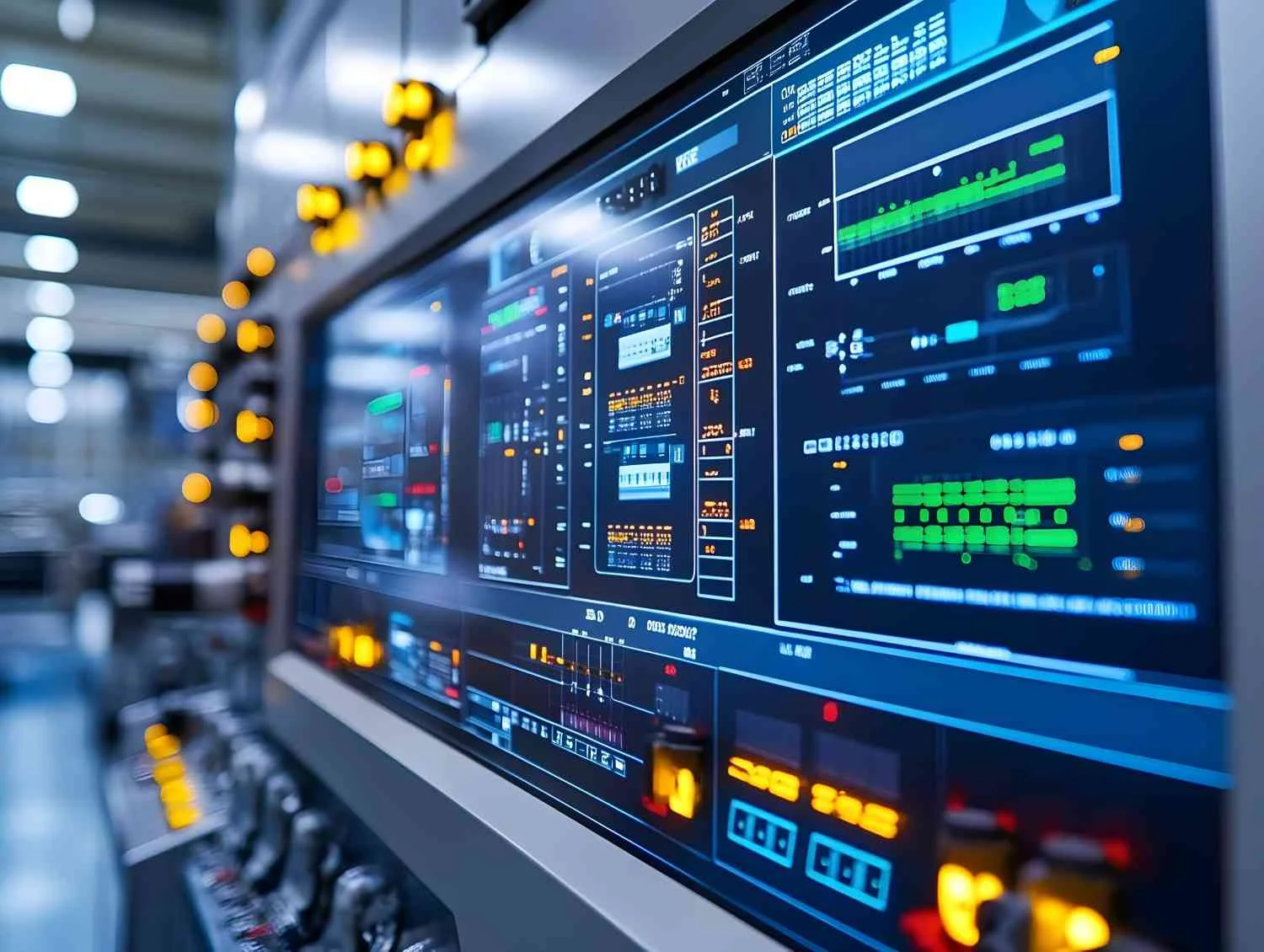
What is a PLC? (The Hardware Controller)
A Programmable Logic Controller (PLC) serves as the local “brain” of a machine. It is a ruggedized industrial computer designed to withstand the heat, dust, and electrical noise of the factory floor while executing logic at high speeds.
- Function: It monitors physical inputs (like sensors) and triggers outputs (like motors or valves) based on its programmed logic.
- Focus: Direct, real-time control of hardware.
- Role: The PLC handles the "if-then" scenarios. If a sensor detects that a bottle is full, then the PLC stops the pump immediately.
What is SCADA? (The Supervisory Software)
Supervisory Control and Data Acquisition (SCADA) is a high-level software architecture. It does not replace the PLC; rather, it acts as a centralized dashboard that communicates with multiple PLCs and other hardware across a facility.
- Function: It aggregates data, provides a graphical interface for operators, and logs historical information for reporting.
- Focus: Monitoring, long-term data acquisition, and human-machine interaction (HMI).
- Role: The SCADA system allows a manager to see the status of every machine in the plant from a single workstation.
Key Differences at a Glance
Access Our Knowledge Base Resources
Bridging the Gap: How They Collaborate
In a typical Philippine manufacturing plant, these systems work in a hierarchy. For example, a Fuji Electric PLC might be on the floor managing the precise timing of a conveyor belt. At the same time, the SCADA system is collecting data from that PLC to track hourly production targets and alert the maintenance team if the belt’s motor begins to draw excessive current.
For facilities with multiple sites or remote assets, this connection becomes even more critical. You can explore how SCADA systems for distributed operations in the Philippines allow managers to oversee several PLCs across different regions from one central hub, ensuring consistent performance regardless of distance.
Summary: Action vs. Information
Understanding this relationship is key to implementing effective automation solutions. To summarize:
- The PLC handles the action: It ensures the machine operates safely and correctly in real-time.
- The SCADA handles the information: It ensures operators have the data needed to make informed decisions and track long-term efficiency.
Future-Proofing Your Facility
As the industrial landscape in the Philippines moves toward smarter, more connected factories, the integration between hardware control and software supervision is becoming seamless. Choosing the right combination of PLC and SCADA technology is not just about keeping the lines running—it is about gaining the visibility needed to reduce downtime and scale your operations.
Whether you are a student learning the ropes or a maintenance engineer looking to upgrade an existing line, starting with a robust hardware foundation like Fuji Electric’s PLC series ensures your supervisory systems have the high-quality data they need to succeed.
Frequently Asked Questions
Find the Right Automation System
Related Automation Topics
Warning: Undefined property: WP_Error::$taxonomy in /home/fesp.blufoxph.xyz/public_html/wp-content/plugins/elementor-pro/modules/query-control/classes/elementor-post-query.php on line 259